If you are searching for how to get the smell of puke out of car upholstery, first, take a breath. A rough car ride, sick child, or unexpected night out can leave behind a smell that seems impossible to remove, but it usually can be handled at home. The key is treating both the visible mess and the odor trapped underneath it. Air freshener alone will only create a strange combination of perfume and sourness.
Start by opening every door and window, then remove floor mats, blankets, car-seat covers, and anything else that can be washed separately. Put on disposable gloves, use paper towels to lift solids, and place dirty materials in a sealed trash bag. Avoid rubbing the mess deeper into fabric. If the spill is still damp, blot from the outside toward the center with clean towels.
How to get the smell of puke out of car carpet and upholstery
Once the mess is removed, inspect the entire area with a flashlight. Vomit can spread under a car seat, into carpet padding, along the edge of a console, or beneath a removable seat cover. Those hidden areas often explain why the smell returns after the surface looks clean.
Mix a small amount of mild dish soap with cool water in a spray bottle or bowl. Apply it sparingly to cloth upholstery and carpet, then blot with a microfiber towel. Do not soak the seat cushion. Excess moisture can settle into foam and create a mildew problem, especially in a closed SUV or minivan.
For lingering organic odors, an enzyme-based upholstery cleaner is usually more useful than a general-purpose fragrance spray. Enzymes help break down the proteins causing the odor. Products sold for pet accidents can work on vehicle fabrics, but read the label first and test a hidden spot for colorfastness. Leather and vinyl need a cleaner designed for those materials rather than an enzyme formula made for fabric.
After cleaning, use a second towel dampened with plain water to lift soap residue, then blot the area as dry as possible. Run the heater or air conditioner with the doors open for a short period, but do not leave a running vehicle unattended. A portable fan aimed into the cabin can speed drying without adding more heat to delicate surfaces.
Cleaning vomit from leather, vinyl, and car seats
Leather usually does not absorb liquid as quickly as cloth, but seams and perforations can hold residue. Wipe the area with a slightly damp microfiber cloth and a leather-safe cleaner. Follow with a conditioner after the surface is completely dry. Do not use bleach, undiluted vinegar, or harsh household degreasers; they can discolor leather or damage its protective finish.
Vinyl dashboards, door panels, and plastic trim can generally be cleaned with warm water and a mild interior cleaner. Use a soft detailing brush around stitching, seat rails, and cup holders. If a child safety seat was involved, check its manual before washing the cover. Some covers are machine washable, while the harness straps should not be scrubbed with strong chemicals or submerged unless the manufacturer specifically permits it.
If vomit reached the seat belt webbing, pull the belt out fully and wipe it with mild soap and water. Let it dry extended, away from direct high heat. A belt that remains sticky, stained, or difficult to retract deserves inspection by a qualified technician because the restraint system is safety equipment.
How to get the smell of puke out of car vents
Sometimes the cabin still smells sour even after the seats and carpet are clean. That can happen when droplets or odor-filled air reached the ventilation system. Turn the fan on low and identify whether the smell becomes stronger when the air flows through the vents. Do not spray cleaner directly into the vents, because liquid can reach electrical components.
Replace the cabin air filter if it smells contaminated or looks dirty. Many vehicles place this filter behind the glove box, but the exact location differs by model. A replacement commonly costs about $15 to $40 if you install it yourself, or roughly $50 to $120 at a shop. Check the owner’s manual for the correct filter and access steps.
With the filter removed, wipe accessible plastic surfaces around the filter housing using a barely damp cloth. Keep moisture away from wiring and blower components. If the odor remains after the filter change, a professional detailer can clean the HVAC intake and ducts with equipment intended for automotive interiors. This is safer than pouring household products into the system.
Odor neutralizers that actually help
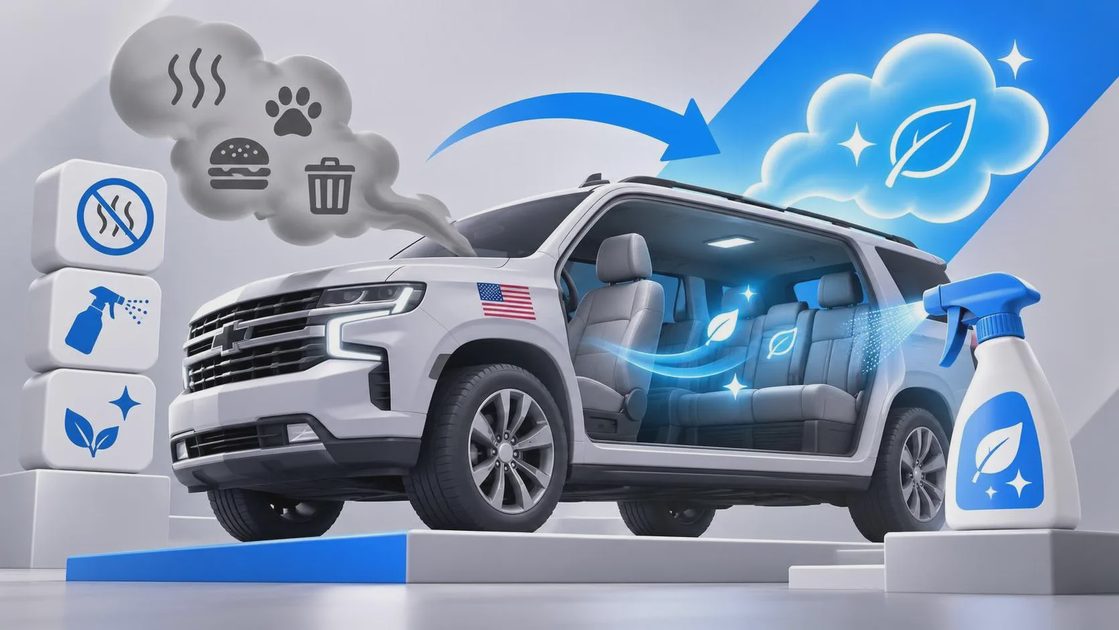
After the source has been cleaned and the cabin is dry, place an open box or shallow bowl of baking soda in the vehicle overnight. Activated charcoal bags are another low-mess option and can be left in the car for several days. These products can absorb some odor, but they cannot replace cleaning contaminated fabric or padding.
A steam cleaner can help with some cloth interiors, but use caution. Too much steam can push moisture into foam, adhesives, or carpet backing. If you rent one, use short passes and extract as much water as possible. Never use steam on materials that the owner’s manual says should stay dry.
Skip heavy fragrance bombs if you are sensitive to scents or regularly drive children, pets, or passengers with asthma. Covering a sour odor with coconut, vanilla, or “new car” fragrance often makes the cabin harder to tolerate. Clean air and complete drying are better goals than a strongly scented interior.
When home cleanup is not enough
If the smell returns after two thorough cleaning attempts, the contamination may be beneath the carpet, inside seat foam, or under a console. A professional detailer can remove seats, lift carpet sections, extract padding, and treat odor at the source. Interior odor treatment often runs around $150 to $400, with larger vehicles or severe contamination costing more.
Get help sooner if liquid reached electrical connectors, warning lights appeared, or the vehicle has a persistent damp smell. Do not mix bleach, ammonia, vinegar, or multiple commercial cleaners. Chemical reactions can create irritating fumes, and aggressive products can damage upholstery or plastic trim.
For a simple accident on a cloth seat, the practical sequence is removal, blotting, enzyme cleaner, water-rinsing by blot, thorough drying, and ventilation. That sequence is more reliable than buying several air fresheners and hoping one wins the battle.
Preventing the next unpleasant cleanup
Keep washable towels, disposable gloves, trash bags, bottled water, and a small enzyme cleaner in a trunk kit. If passengers are prone to motion sickness, place a lined container or disposable sick bag within easy reach and encourage looking toward the horizon rather than reading in the back seat. Smooth driving, fresh air, and regular breaks can also help.
If you transport pets, use a waterproof cargo liner and a washable seat cover. Families may want a fitted protector beneath a child’s car seat, provided it is approved for use with that restraint. These small preparations will not prevent every surprise, but they can keep a cleanup from reaching the carpet padding.
When you know how to get the smell of puke out of car materials, the job feels far less overwhelming. Remove the source, treat the fabric safely, dry everything completely, and check the filter if the odor seems to come from the vents. Your car may need a full afternoon, but a fresh interior is usually within reach.
No comments yet.