Sisters, question for you: has one rough road trip left your car smelling like a tiny disaster zone? Learning how to get vomit smell out of car upholstery is less about drowning the cabin in air freshener and more about removing the source. Vomit can soak into fabric, carpet padding, seat seams, and even the ventilation system. The good news is that you can usually handle the cleanup at home with patience, household supplies, and a careful plan.
Start with safety and a complete cleanup
Before cleaning, open every door and window. Put on disposable gloves, remove floor mats, and pick up any solid material with paper towels or a plastic scraper. Place everything in a sealed trash bag outside the vehicle. Do not rub the mess deeper into cloth seats or carpet. Blot instead, working from the outer edge toward the center.
Check the seat belt, door pocket, center console, and the area underneath the front seat. A small amount hidden in a seam can keep producing odor for days. If the spill reached a child safety seat, follow that seat's manufacturer instructions. Some car seats cannot be safely disinfected after a major contamination and might need replacement, especially if liquid reached the harness webbing.
If the affected area is leather or synthetic leather, wipe it gently with a damp microfiber cloth and a small amount of leather-safe cleaner. Avoid soaking perforated leather because liquid can travel through the tiny holes and settle beneath the seat surface.
How to get vomit smell out of car fabric
For cloth upholstery, mix a small amount of mild dish soap with warm water in a bucket. Test the solution in a hidden spot first. Apply it with a microfiber cloth rather than pouring it directly onto the seat. Blot repeatedly, then use a second cloth dampened with clean water to lift away soap residue. Leaving soap behind can make the fabric sticky and attract more dirt.
An enzyme cleaner is often the most useful product for this job. Enzymes break down organic residue instead of simply covering the smell. Look for products sold for pet accidents, such as Nature's Miracle or Rocco & Roxie, and confirm that the label says the product is suitable for automotive fabric. Spray enough to reach the contaminated area, but do not flood the cushion. Give it the label's recommended dwell time before blotting.
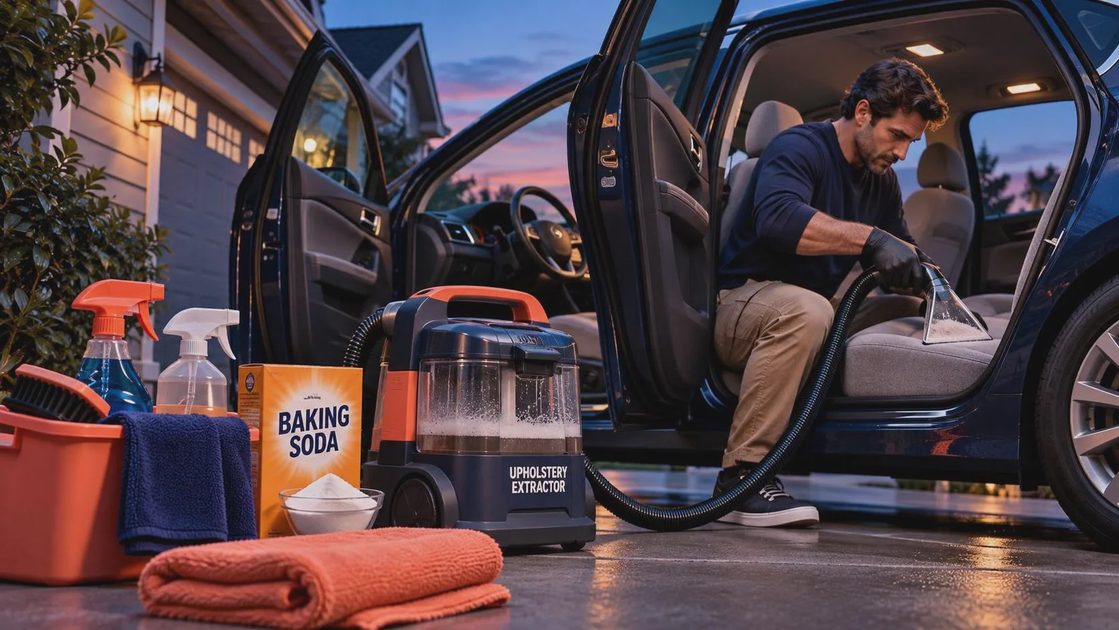
A wet-dry vacuum or upholstery extractor can pull out moisture and residue more effectively than towels alone. If you do not own one, many hardware stores rent compact carpet cleaners for roughly $25 to $50 per day.
Treat the carpet, padding, and floor mats
Carpet is often where the smell hides longest because the liquid can pass through the top fibers into foam or felt padding. Remove the mats from the vehicle and clean them outside on a washable surface. Scrub rubber mats with soap and water, then rinse and dry them fully. For carpet mats, use the same enzyme cleaner and extraction method used on the seats.
Inside the car, lift the carpet edge if it can be released without damaging trim. You do not need to dismantle the entire interior, but looking underneath the mat can reveal a damp patch that explains why the smell keeps returning. Blot moisture with old towels, apply enzyme cleaner, and extract as much liquid as possible.
After cleaning, park in a safe, sunny location with the doors open for several hours. Position a fan near the open door if you have access to an extension cord. Drying matters as much as cleaning: trapped moisture can create a musty smell and encourage mildew. Do not close the car until the upholstery and padding feel completely dry.
Use odor absorbers after the surface is clean
Once the visible mess is gone and the interior is dry, place open boxes of baking soda or activated charcoal bags in the cabin. Charcoal products from brands such as Meguiar's or Chemical Guys are easy to find, though an inexpensive unscented charcoal bag can also help. Leave the absorber inside for two to five days, replacing it if the odor remains strong.
Avoid relying on perfume-heavy sprays. They can combine with the original smell and make the cabin harder to tolerate. Skip chlorine bleach, ammonia, and strong solvents, which can discolor upholstery, damage plastics, or create irritating fumes. Vinegar is sometimes suggested online, but its own sharp smell can linger and it does not replace enzyme cleaning when organic residue is involved.
If the odor seems strongest when the fan or air conditioner runs, the spill may have reached the HVAC intake near the base of the windshield. Replace the cabin air filter if it is dirty, then use an automotive HVAC odor product exactly as directed. Never spray a household cleaner deep into the vents.
How to get vomit smell out of car when it keeps returning
A returning smell usually points to one of three problems: residue remains below the surface, the padding is still damp, or the ventilation system was affected. Use your nose to compare the driver seat, passenger seat, rear floor, and air vents. A small flashlight can help you inspect dark seams and the space beneath seats.
Repeat enzyme treatment only after the previous application has dried. Several light treatments are safer than one soaking application. If the smell is still noticeable after two thorough cleaning cycles, a professional detailer is often the sensible next step. Expect an interior odor treatment or extraction service to cost about $100 to $300, with higher prices for seats that must be removed or padding that needs replacement.
Ozone treatment is sometimes offered by detail shops, but the vehicle must be empty of people, pets, and plants during treatment and fully aired out afterward. Ozone is not a substitute for removing vomit residue; it should be considered an additional odor treatment, not the first cleaning step.
Make the next cleanup easier
After the interior is fresh, keep a small emergency kit in the trunk. Include disposable gloves, trash bags, paper towels, microfiber cloths, bottled water, disinfecting wipes for hard surfaces, and a travel-size enzyme cleaner. A washable seat cover can also protect the rear bench during long trips, especially when someone is recovering from illness or a pet regularly rides in the car.
For prevention, keep motion-sensitive passengers in a position with a clear view outside, limit heavy meals before winding roads, and pull over early when someone says they feel sick. If a spill happens, immediate blotting can prevent liquid from reaching the cushion foam. That few-minute response can save hours of scrubbing later.
Knowing how to get vomit smell out of car interiors gives you a practical recovery plan: remove the source, treat organic residue with an enzyme cleaner, extract moisture, dry everything thoroughly, and use odor absorbers afterward. If the smell survives those steps, paying for a professional detail is usually less frustrating than repeatedly masking it. Your car can feel clean and comfortable again, and one awful ride does not have to define the whole vehicle.
No comments yet.