Sisters, question for you: when you turn up your favorite song, do you want a concert feeling, a calm podcast voice, or simply music that sounds better than the factory speakers? The best car audio brands offer different answers. Choosing one is less about impressing someone at a car meet and more about matching your listening habits, vehicle, budget, and tolerance for complicated controls.
Start with the listening experience you want
Before comparing car audio brands, spend a few minutes noticing what disappoints you about your current system. Are vocals thin and hard to understand? Does bass disappear when you drive on the highway? Does the sound become harsh when you raise the volume? Those details point toward the upgrade you actually need.
If you mostly listen to pop, country, podcasts, or singer-songwriter music, clear midrange is probably your priority. Midrange is the part of the sound where most voices, guitars, and piano notes live. If you prefer hip-hop, dance music, or movie soundtracks, a stronger subwoofer can add depth without forcing every speaker to work too hard.
A complete system is not automatically better. Replacing only the front speakers can make a noticeable difference for roughly $150 to $400 in parts, while a full installation with an amplifier and subwoofer can climb past $1,000. Brands such as JBL, Kicker, Alpine, Kenwood, Sony, Pioneer, Rockford Fosgate, and Hertz cover a wide range of needs and prices.
How car audio brands differ in real life
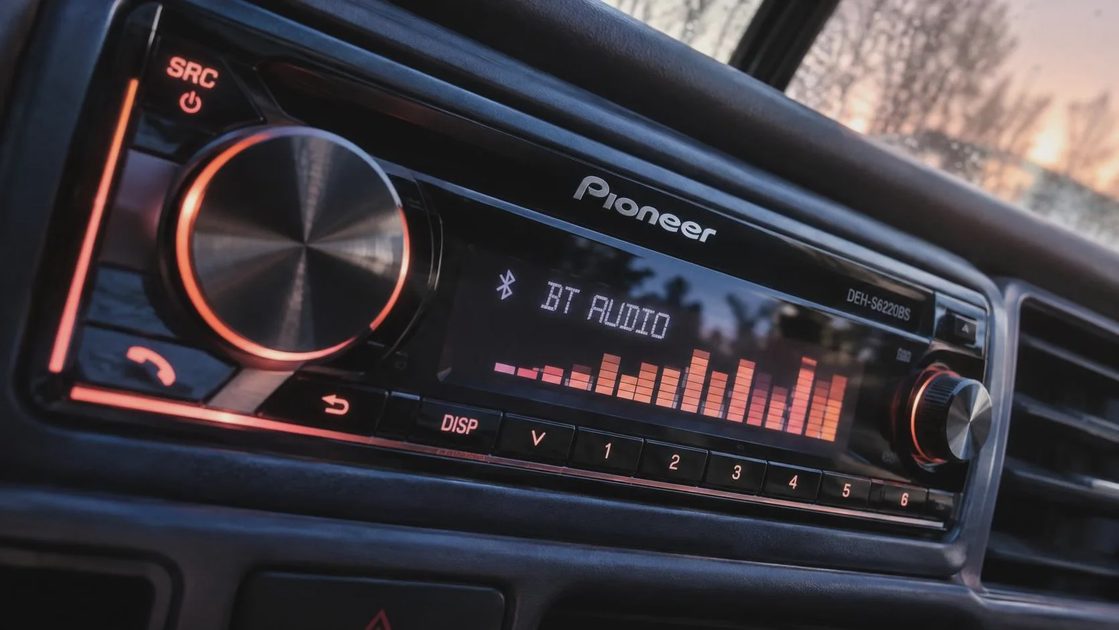
Car audio brands often have recognizable personalities, although each product line still deserves its own review. JBL is widely known for an energetic sound and a broad selection of speakers, amplifiers, and subwoofers. Kicker is a familiar choice for drivers who want punchy bass and straightforward aftermarket upgrades. Alpine is often associated with clean sound and well-integrated receivers, while Pioneer and Kenwood offer many practical head-unit features.
Sony is worth a look if you care about a modern interface, smartphone compatibility, and a polished everyday experience. Rockford Fosgate has a strong reputation among drivers building systems around bass and power. Hertz and Focal appeal to listeners who are especially focused on detail, sound staging, and premium materials. These general impressions are useful starting points, not rules you have to follow.
Your vehicle matters just as much as the logo on the speaker grille. A compact sedan with a noisy cabin may need different tuning from a quiet luxury SUV. A convertible can lose bass because the open cabin changes how sound travels. In an older vehicle, the best upgrade may begin with replacing a dated receiver that struggles with Bluetooth or phone calls.
The most important pieces of a car audio upgrade
When people talk about car audio brands, they sometimes focus only on speakers. Speakers matter, but the receiver, amplifier, wiring, installation, and tuning all shape the final result. The receiver, sometimes called the head unit, controls music, calls, navigation, and settings. A good receiver can make daily driving easier with Apple CarPlay or Android Auto.
Speakers handle different portions of the music. Coaxial speakers combine multiple drivers in one unit and are usually affordable and simple to install. Component speakers separate the tweeter, which plays higher notes, from the woofer, which handles lower notes. That separation can create a more open, detailed sound, but installation often costs more.
An amplifier gives speakers cleaner power and can reduce distortion at higher volume. A subwoofer handles very low bass that ordinary door speakers cannot reproduce effectively. You do not need every piece at once. A sensible plan might begin with front component speakers, add sound-deadening material to the doors, and wait on the subwoofer until you know what is still missing.
Match the system to your budget
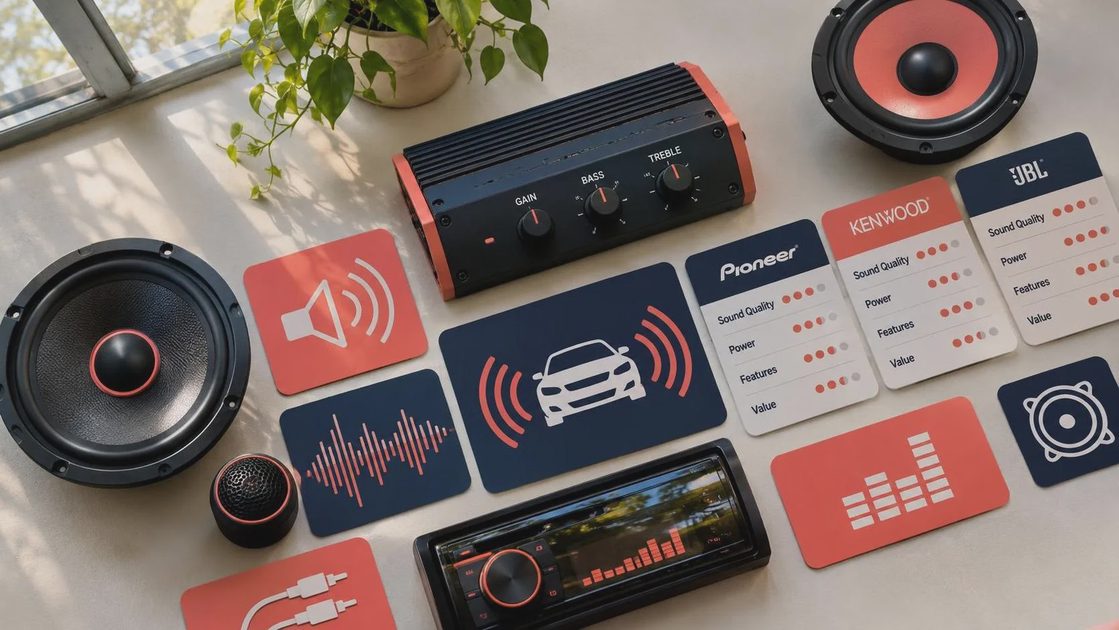
A modest upgrade can feel wonderfully personal. For about $200 to $500, a driver might replace worn factory speakers and improve the receiver. That range is realistic for a daily driver where clarity and hands-free calling matter more than competition-level bass. Ask the installer whether the quoted price includes brackets, wiring adapters, labor, and any steering-wheel-control interface.
A midrange project around $600 to $1,200 may include better front speakers, an amplifier, door treatment, and professional tuning. Tuning means adjusting crossover points, equalizer settings, and speaker levels so the system sounds balanced from the driver’s seat. This step is easy to overlook, yet it can matter more than spending another $200 on a different logo.
Premium projects can exceed $2,000, especially when they include custom fabrication, multiple amplifiers, a DSP, or a hidden subwoofer enclosure. Car audio brands such as Focal, Hertz, and JL Audio appear frequently in enthusiast builds, but expensive equipment cannot overcome poor placement or careless installation. A clean, well-tuned midrange system can be more enjoyable than a flashy setup that rattles every door panel.
Features that make daily driving better
The best car audio brands are not necessarily the ones with the biggest power number on the box. Look for features you will actually use. Wireless Apple CarPlay and Android Auto can reduce cable clutter. A bright display with physical volume controls is easier to use when the sun hits the screen. A microphone placed near the driver can improve calls, while a receiver with multiple camera inputs may help with parking.
For a family vehicle, reliable Bluetooth, simple passenger controls, and a rear entertainment connection may matter more than extreme bass. For a weekend car, you might care about high-resolution audio, a compact amplifier, or a system that preserves the original dashboard appearance. If you often drive alone after dark, clear navigation prompts and easy steering-wheel controls are genuine comfort and safety improvements.
Ask whether the installation will preserve factory safety systems, backup-camera functions, and warning chimes. Some newer vehicles use integrated electronics, so a replacement receiver is not always a simple swap. A reputable installer should explain what remains functional before taking payment.
A simple way to choose with confidence
Start by setting a total budget, including installation. Then listen to two or three systems in person using music you know well. Do not rely only on a showroom demo; ask whether the speakers can be heard at moderate volume and whether the installer can demonstrate voice clarity. Car audio brands can sound dramatically different depending on the vehicle, amplifier, and tuning.
Next, decide whether you want a small improvement or a complete transformation. Write down your must-have features, such as wireless phone integration, a backup-camera display, strong vocals, or bass that you can feel without rattling the cabin. Share that list with an installer rather than asking for the most powerful package.
Finally, choose a system that fits your actual life. The right upgrade should make a morning commute more pleasant, a road trip less tiring, and your favorite playlist feel new again. Car audio brands are simply the starting point; your ears, your car, and your everyday routines should make the final decision.
No comments yet.