Sisters, question for you: when did your car become the place where breakfast, backpacks, soccer cleats, and emergency snacks all live together? The best mom cars are not about giving up personality. They are about finding a vehicle that handles real life without making every trip feel like a logistical puzzle. Whether you are driving one toddler or three teenagers, the right vehicle should feel comfortable, safe, easy to park, and financially manageable.
What makes a car a great family vehicle?
There is no single definition of mom cars. For one driver, it is a compact SUV that fits a stroller but still slips into a city parking space. For another, it is a three-row vehicle with enough room for grandparents, sports gear, and a grocery run. The useful question is not, “What does everyone else drive?” It is, “What problems do I need this car to solve every week?”
Start with the daily routine. Count the car seats, measure the garage, and think about how often the third row will actually be used. A wide-opening rear door can matter more than a dramatic exterior design when you are buckling in a child during a windy January morning. A low lift-over height can save your back when loading a stroller or a heavy grocery bag. Easy-to-clean upholstery, rear air vents, and cupholders that hold a real water bottle are not silly details. They are quality-of-life features.
Safety technology deserves attention, but it should be explained plainly. Automatic emergency braking can help reduce the severity of some front-end crashes, while blind-spot monitoring alerts you when a vehicle is hard to see beside you. Adaptive cruise control adjusts speed on longer highway drives. These features do not replace an attentive driver, but they can make a busy commute less exhausting.
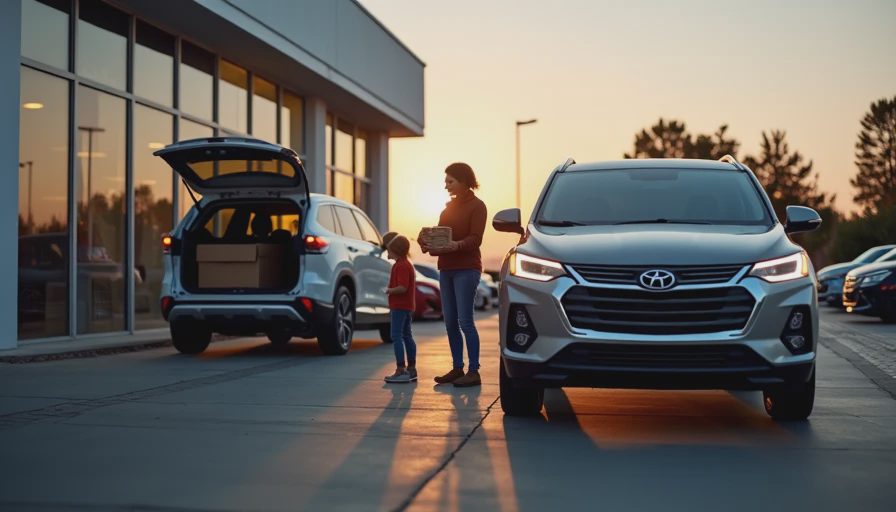
The best types of mom cars to compare
Compact SUVs such as the Honda CR-V, Toyota RAV4, Mazda CX-5, and Subaru Forester are popular for a reason. They offer a higher seating position, useful cargo areas, and manageable exterior dimensions. A CR-V or RAV4 can usually handle a stroller, groceries, and a child’s backpack without feeling enormous. The Mazda CX-5 brings a more polished cabin and enjoyable handling, while the Forester gives drivers excellent outward visibility and available all-wheel drive.
Midsize SUVs are a better match when you need more passenger space. The Honda Pilot, Toyota Highlander, Kia Telluride, Hyundai Palisade, and Subaru Ascent provide additional room, often with a third row. Before choosing one, sit in the back row yourself. Some third rows work well for younger children but feel cramped for adults. Also test whether a car seat blocks access to the seats behind it.
Minivans remain the quiet champions of mom cars. The Honda Odyssey, Toyota Sienna, and Kia Carnival offer sliding doors, flexible seating, and a low step-in height. Sliding doors are especially helpful in tight parking lots because a child cannot swing one into the neighboring vehicle. The Sienna is available only as a hybrid, while the Odyssey and Carnival emphasize different combinations of space, comfort, and features. A minivan may not create the same instant excitement as a sporty SUV, but its usefulness is hard to argue with.
A smaller sedan or hatchback can also be a smart choice. If your household has one child, limited parking, and no need for all-wheel drive, a Honda Civic, Toyota Corolla, or Subaru Impreza could provide lower purchase and fuel costs. The most practical option is the one that fits your actual life, not the one that looks most like a family stereotype.
Comfort, cleanup, and the details you touch daily
A family vehicle should be judged from the driver’s seat and the back seat. Can you reach the climate controls without digging through a touchscreen menu? Do the front seats remain comfortable after an hour of stop-and-go traffic? Is there enough space beside the car seat for a child to climb in without twisting sideways? Small frustrations become big ones when repeated twice a day for several years.
Look for rubber floor mats, stain-resistant upholstery, rear sunshades, and a power liftgate if you regularly carry bulky items. A 360-degree camera can be useful in crowded lots, but a clear rear window and properly adjusted mirrors still matter. Test the infotainment system with your phone before buying. Apple CarPlay and Android Auto can make navigation and music simpler, especially when the built-in system feels dated.
Do not overlook storage. A deep center console, door pockets wide enough for bottles, and an accessible place for wipes can prevent the front cabin from becoming a rolling junk drawer. Bring your actual stroller or booster seat to a dealership. Salespeople see this often, and a real test tells you more than a glossy brochure.

How the choice affects your insurance budget
The purchase price is only one part of owning mom cars. Insurance premiums are influenced by the vehicle’s repair costs, safety equipment, theft risk, location, driving history, coverage limits, and deductible. A newer SUV with expensive sensors in the bumpers can cost more to repair after a minor collision than an older, simpler vehicle. That does not automatically make it a bad choice, but it belongs in the budget.
Before signing paperwork, request insurance quotes for your top two or three models. Compare the same liability limits, comprehensive and collision coverage, and deductibles each time. Liability coverage helps pay for injuries or property damage you cause to others. Collision coverage applies to damage from a crash, while comprehensive coverage generally addresses non-collision events such as theft, hail, falling objects, or animal strikes.
For example, a driver comparing a used compact SUV at $24,000 with a newer three-row SUV at $42,000 might discover that the larger vehicle costs more not only to finance but also to insure and repair. Raising a deductible from $500 to $1,000 can reduce premium costs, but only choose that option if you could comfortably cover the higher out-of-pocket amount after a claim. Bundling auto and homeowners or renters insurance can also create savings with some insurers.
A simple test-drive checklist
Take your time with the test drive. First, install every car seat you currently use. Check whether the front passenger still has legroom and whether the seat belt buckles remain reachable. Next, open every door and load the stroller, sports bag, or groceries you normally carry. Fold the second row and test third-row access if applicable.
Drive on a street with speed bumps, a highway entrance, and a tight parking area. Listen for rattles, judge the brake pedal, and notice whether the steering feels predictable. Try parallel parking and backing into a space. A vehicle that feels intimidating at the dealership may become more stressful during school pickup.
Ask about scheduled maintenance, tire replacement, roadside assistance, and warranty coverage. Get an insurance quote before negotiating the final price. If the monthly payment only works when nothing unexpected happens, the vehicle is too expensive. Leave room for registration, fuel, maintenance, car seats, and the occasional $600 repair that arrives at the least convenient time.
Choose the car that supports your real life
The best mom cars are not automatically the biggest or most expensive. They are the ones that make morning departures smoother, protect your energy on long drives, and give everyone enough room to arrive without arguing. A compact crossover can be perfect for one family, while a minivan is the obvious win for another. A stylish wagon or sedan may be exactly right when cargo needs are modest.
Make a short list based on your routine, test each finalist with your real gear, and price insurance before you commit. Then choose the vehicle that feels like a helpful teammate rather than another responsibility. Your life is already full. Your car should make it a little easier.
No comments yet.