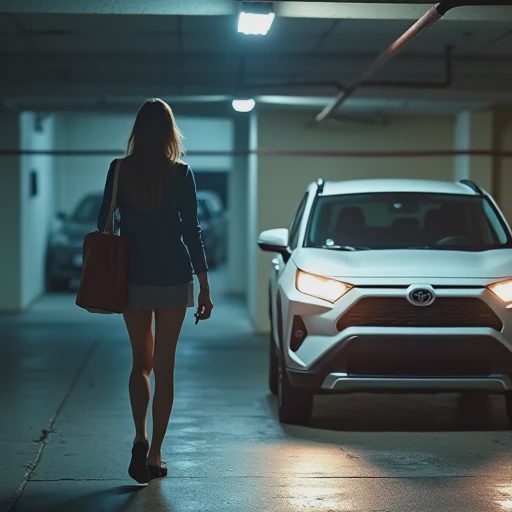
Let me set the scene. You know this scene. Every woman knows this scene.
It's 10 PM. You stayed late at work, or your fitness class ran over, or you had dinner with friends and suddenly it's darker than you planned. The parking garage is mostly empty. The fluorescent lights are doing that flickering thing. Your footsteps echo in a way that makes it sound like there's someone else walking — and maybe there is.
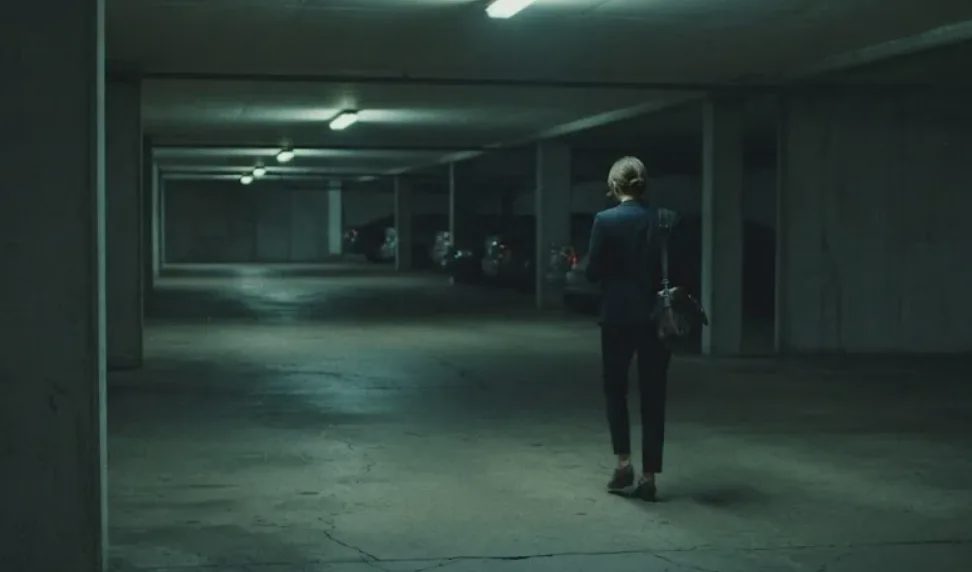
Your keys are already in your hand. Not in your purse. In your hand. The longest key is poking out between your index and middle finger. You didn't think about doing this. You just did it. You've been doing it since you were old enough to walk to a car alone.
And in that moment, walking toward your car, here's what you are absolutely not thinking about: I wonder what my 0-60 time is.
The YouTube Rabbit Hole That Made Me Write This
Last week I fell into a car review rabbit hole on YouTube — something I do more often than I'd like to admit. Three different reviewers, three different vehicles, and every single one of them led with the 0-60 time. Not just mentioned it. Led with it. As if the most important thing about a two-ton metal machine is whether it can launch itself from a stoplight 0.3 seconds faster than the competition.
I turned off the third video mid-sentence and just sat there in my living room, frustrated in a way I hadn't been able to articulate before. And then it hit me:
I have never, not once, in my entire life, stood in a parking garage at night and thought, I wish this car accelerated faster.
But here's what I have thought:
Is there someone behind that pillar?
Can I get inside and lock the door before anyone gets close?
Why is this row so dark?
Did I park too far from the elevator?
I should have texted someone my ETA.
These are the performance metrics that actually matter to me. And the car industry has no language for them.
So Let's Talk About Real Safety
Not the safety they put in the brochure. Not the five-star crash test rating. Not the number of airbags.
I'm talking about the feeling you get in your chest when you're walking across a dark lot and you see your car waiting for you. Do you feel relief? Do you feel exposed? Does your car do anything — anything at all — to make those thirty seconds feel less vulnerable?
Because those thirty seconds are the most honest car review you'll ever write. And nobody's publishing it.
So here's mine.
The Car That Changed How I Feel at Night
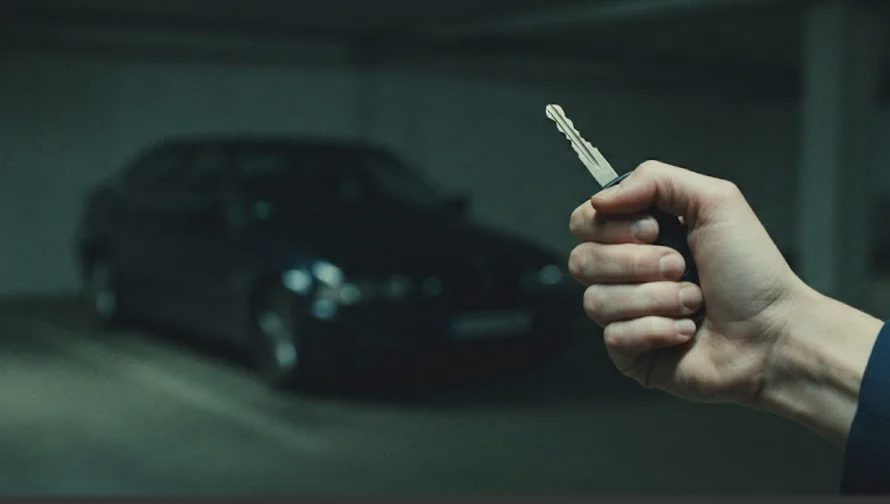
I used to drive a sedan. Low to the ground, dark color, perfectly fine vehicle by every conventional measure. But walking up to it in a parking garage, I always felt... exposed. Like I was approaching something small and low and vulnerable, not something that would protect me.
Last year I switched to a compact SUV. I wasn't thinking about safety psychology when I made the switch — I wanted more cargo space and better ground clearance for trail heads. But the first time I walked up to it in a dark parking lot, something clicked.
The car sits higher. Not lifted-truck high, but high enough that I can see it from farther away. I know where I'm going. I'm not wandering through rows squinting at sedans that all look the same in the dark.
The remote unlock lights up the cabin from 30 feet away. The headlights flash once. The mirrors unfold. It's a small gesture, but it says: I see you coming. I'm ready for you. The car acknowledges my existence before I reach the door. That matters.
I get in, hit the lock button immediately — not after I put on my seat belt, not after I start the engine. Immediately. The doors lock with a solid, satisfying thunk. No fumbling for a lock switch on the door panel. It's right there on the armrest, under my thumb.
The higher seating position means I can see over the cars parked next to me. I can scan my surroundings before I back out. Nobody can crouch down behind my rear bumper and disappear from view the way they could with my old sedan.
None of these things are listed on the window sticker. None of them showed up in the YouTube reviews. But every single one of them makes me feel safer when it's dark and I'm alone and I just want to get home.
My Personal Safety System (That Has Nothing to Do with the Car Itself)
I want to be clear: I don't think any car, no matter how well-designed, can replace the things we do to keep ourselves safe. Here's what lives in my system:
My keys are out before the elevator doors open. Every time. The gym, the office, the mall — it doesn't matter. Keys out. Longest key ready. This is muscle memory now.
I share my location with two friends. They know my commute. They know when I'm driving home from somewhere unusual. I text one of them "leaving now" before I walk out of a building at night. It takes four seconds.
There's a small but blindingly bright flashlight on my keychain. Not for finding things in my purse. For lighting up dark corners of parking structures. For making myself visible. For making anyone else visible.
I always back into parking spots now. It took practice, but exiting forward at night — when I'm tired, when it's dark, when I just want to leave — feels dramatically safer than backing out blind.
If you do any of these things, you already know they're not paranoia. They're competence. They're the quiet expertise of moving through the world in a body that has been taught, since adolescence, to calculate risk.
What I Actually Want to Hear From You
I opened this thread because I genuinely, deeply want to know:
Which car made you feel the most secure — and why?
Not the car with the best safety ratings. Not the one the salesman said was "built like a tank." The car where you sat in the driver's seat, closed the door, and felt your shoulders drop an inch because your body decided it was safe.
For me, it was the switch from sedan to SUV, plus the remote lights and the immediate lock button. But I know there are other answers out there:
- Maybe it was a Volvo whose doors closed with that solid, bank-vault weight that made you feel like nothing could get in.
- Maybe it was a Subaru with windows so big you could see every corner of the lot before you got in.
- Maybe it was a car with a physical key you could grip like a weapon, not a keyless fob that made you feel unsure whether it was locked.
- Maybe it was a car with an interior light that automatically turned on when you unlocked it, so you could confirm — instantly — that the back seat was empty.
- Maybe it was a beat-up old sedan that just happened to sit at the right height, in the right color, with the right sightlines.
And the reverse question is just as important: Has a car ever made you feel less safe?
Too much window, not enough visibility, a delay between unlocking and the lights coming on, door locks that are confusing in the dark, an infotainment screen that glows so bright it ruins your night vision — tell me. These are the details that deserve to be in car reviews.
And I want to hear the rituals, too: What do you do, every single time, when you walk to your car at night?
Do you park under a light, even if it means a longer walk to the entrance? Do you call someone, or pretend to? Do you check the back seat before you open the door? Do you hold your key a certain way? Where did you learn to do it, and when did it become automatic?
Let's Redefine "Performance"
The car industry has spent a century measuring performance in horsepower and torque and 0-60 times and Nürburgring lap records. Those numbers mean nothing in a dark parking lot.
To me, a car performs well if it gets me from "uneasy" to "safe" in the shortest possible time. If it lights up when it sees me coming. If it locks with one touch. If it lets me see my surroundings and be seen. If it doesn't add friction to the already-complicated equation of being a woman moving through the world alone.
That's not a "soft" metric. It's not a "girl thing." It's the most fundamental performance question a vehicle can answer: will you protect me?
Some cars do. Some cars don't. And we should be the ones writing those reviews.
So tell me about your car. Tell me about your ritual. Tell me which vehicle made you feel the safest you've ever felt, and why.
I'm listening.
🔦 Keys out before the elevator. Every time.
🚙 Currently: a compact SUV that lights up when it sees me
Two friends have my location. They know why.
No comments yet.